
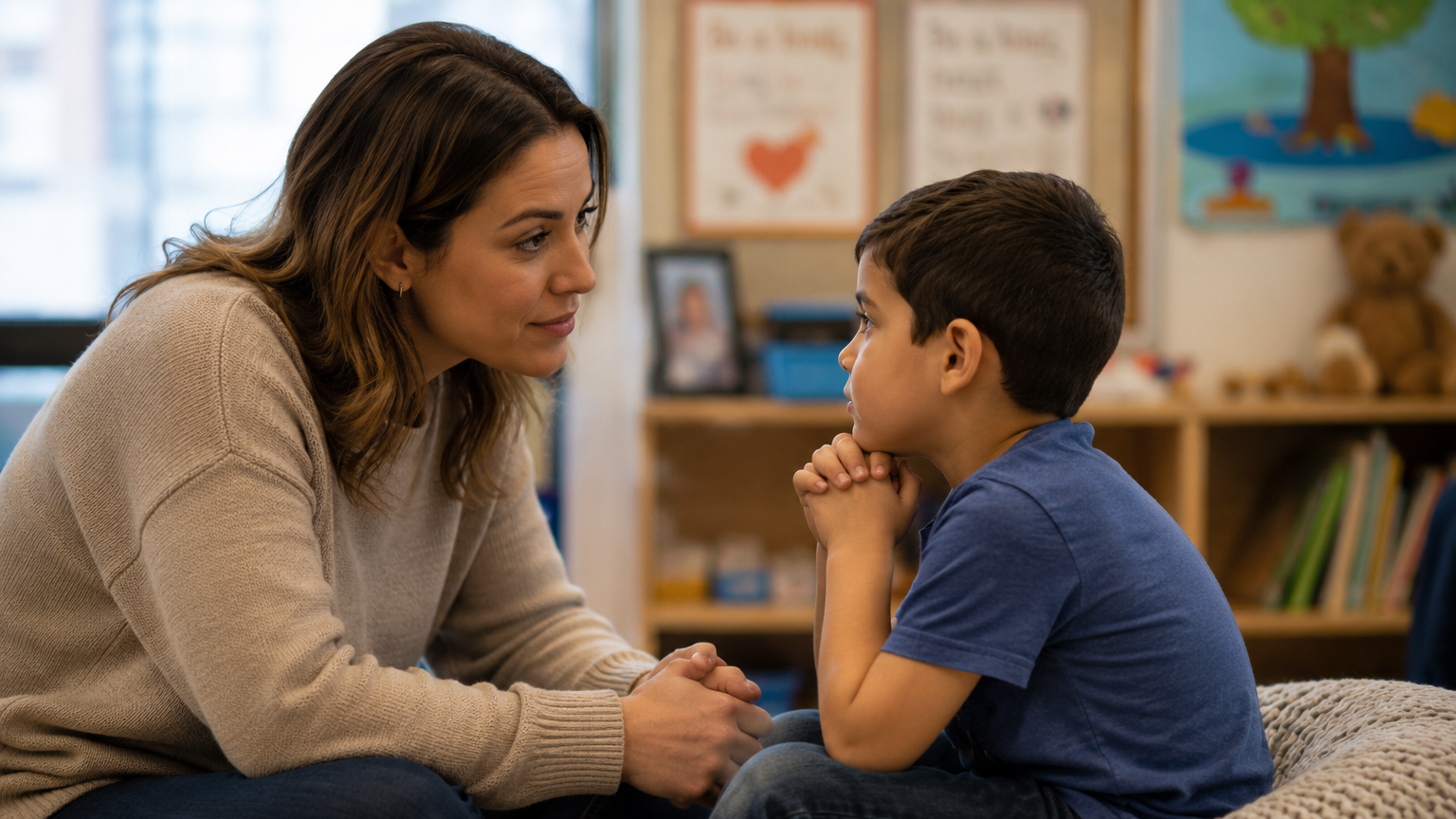
One of the greatest misconceptions about bullying is the belief that aggressive children simply enjoy hurting others. Sometimes that is how it appears. But appearances can be deceiving.
Before we ask, "Why did this child do that?"
we should also ask, "What happened to this child before this happened?"
Those two questions lead us in very different directions. One seeks blame. The other seeks understanding. Understanding does not remove accountability. It simply helps us respond more wisely.
Every Child Is Trying to Meet a Need
Every human being has basic emotional needs. We all long to feel:
Safe
Accepted
Valued
Loved
Respected
Connected
When these needs are consistently met, children generally develop healthy ways of relating to others. When they are repeatedly threatened or ignored, children adapt -
Some become quiet.
Some become anxious.
Some withdraw.
Some try to disappear.
Others become aggressive.
Each child is trying to survive in the best way they know how.
The Brain Learns Survival
Imagine a child growing up in an environment filled with:
Yelling
Unpredictability
Humiliation
Violence
Constant criticism
Emotional neglect
The child's nervous system begins learning an important lesson: "The world is not always safe."
Over time, the brain becomes increasingly skilled at detecting danger. This helped the child survive. The problem is that the nervous system does not always distinguish between past danger and present safety.
Years later, a small disagreement at school may feel much larger inside the child's body. The reaction may seem extreme. But the nervous system is responding to more than the present moment. It is responding to a history.
Fight Is One Form of Protection
Many people have heard of the body's stress responses. When children feel threatened, they may:
Fight
Flee
Freeze
or seek comfort from trusted adults
Some children learn that becoming the strongest person in the room feels safer than becoming the weakest. Power becomes protection. Aggression becomes armor. Control becomes security. The behavior is unhealthy. But beneath the behavior often lives fear.
The Child Beneath the Behavior
Imagine two children pushing each other on the playground. From the outside, the behavior looks similar. Inside, the stories may be completely different. One child may simply be testing limits.
Another may have spent years learning that strength is the only way to avoid being hurt.
Without understanding the story, we risk treating every child exactly the same. Wise educators recognize that behavior is only one part of the picture.
Trauma Changes Expectations
Children naturally build expectations about the world -
Some expect: "Adults will help me."
Others expect: "No one is coming."
Some expect: "I can trust people."
Others quietly believe: "I have to protect myself."
These expectations influence relationships long before children have words to describe them.
Emotional Regulation Can Be Learned
The encouraging news is this: The nervous system continues learning throughout life.
Healthy relationships.
Safe classrooms.
Consistent adults.
Emotional literacy.
Predictable routines.
All of these experiences help teach the nervous system something new. Little by little, children begin discovering:
"I am safe here."
"I can ask for help."
"I do not have to fight every battle."
Growth happens through repeated experiences of safety.
The Role of Teachers
Teachers cannot erase a child's past, but they can influence a child's future:
A calm teacher helps regulate an anxious classroom.
A patient teacher models another way to respond.
A respectful teacher demonstrates that authority does not require intimidation.
Children learn from these moments every day.
A Biblical Perspective
The Apostle Paul writes in Romans 12:21: "Do not be overcome by evil, but overcome evil with good."
Notice that Paul does not tell us to ignore harmful behavior. He calls us to overcome it. Sometimes overcoming evil begins by refusing to let fear become the teacher. Children need adults who model another way. A way marked by courage, truth, compassion, and self-control.
A Different Perspective
Discipline should do more than correct behavior. It should develop human beings. When schools intentionally teach:
emotional regulation
empathy
healthy communication
conflict resolution
self-awareness
children gain healthier ways to meet their emotional needs. The goal is not simply fewer disciplinary referrals. The goal is helping children become emotionally healthy adults.
A Good Reflection
Perhaps the child who appears the strongest is carrying the greatest fear. Perhaps the loudest child has never truly felt heard. Perhaps the most aggressive child has never experienced consistent emotional safety.
We must hold children accountable for their actions. That is part of helping them grow. But accountability without understanding rarely transforms hearts. Understanding without accountability rarely transforms behavior. Children need both. Firm boundaries. Compassionate guidance. Clear expectations.
And adults who believe they are more than the worst thing they have ever done. Because every child is becoming someone. And every interaction either strengthens fear or strengthens hope. The choice belongs to us.