
Culture Is the Curriculum No One Sees: Creating Classrooms Where Bullying Cannot Thrive
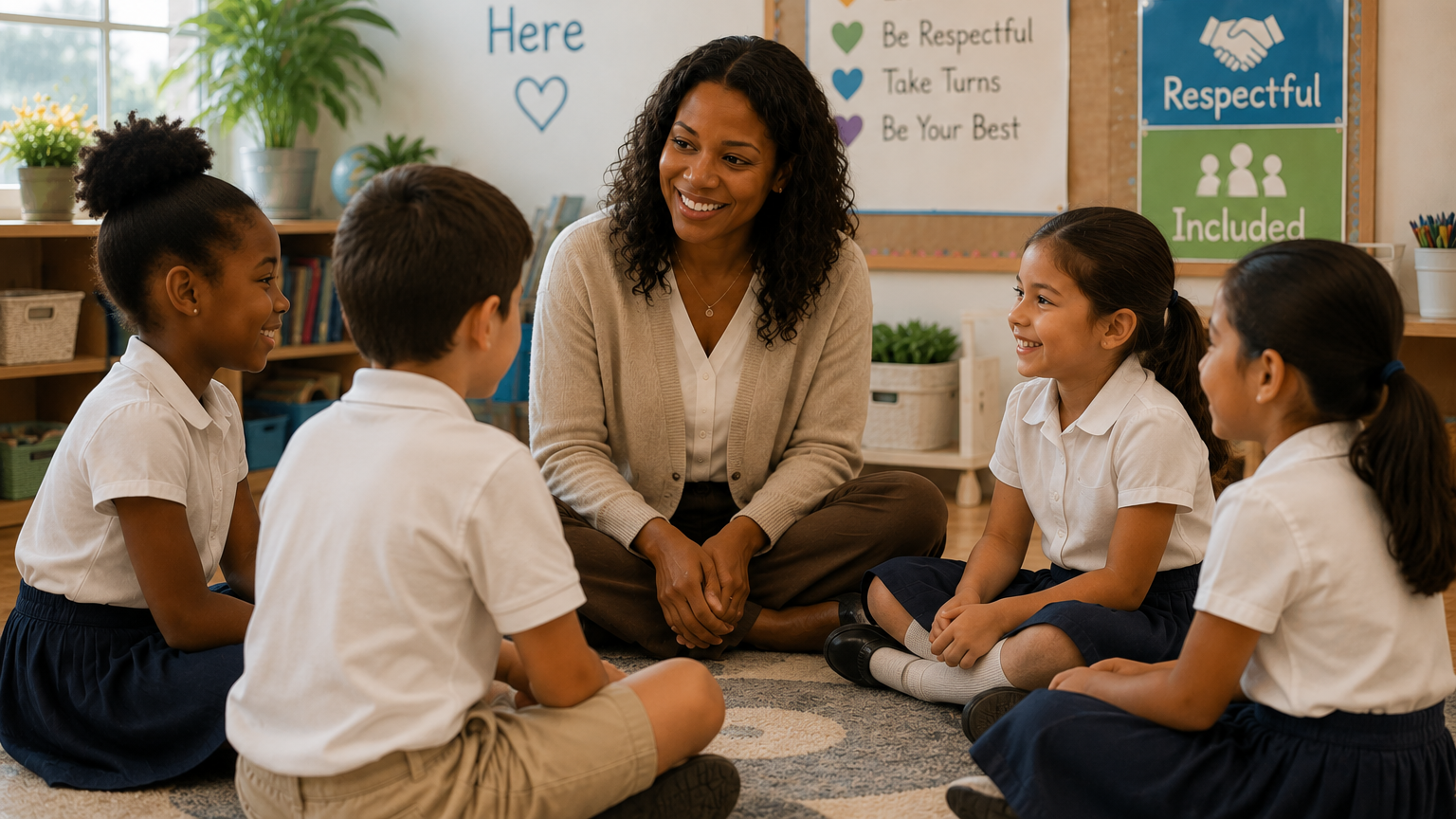
Walk into two classrooms. Both teach the same grade. Both use the same curriculum. Both have qualified teachers. Yet one classroom feels different. Students greet one another. Mistakes are treated as opportunities to learn. Children laugh together. Differences are respected. Students help classmates who struggle. The room feels emotionally safe.
Now walk into another classroom. Students are cautious. Some children sit alone. Mistakes are met with ridicule. Sarcasm is common. Fear quietly lives beneath the surface.
The difference is not found in the textbooks. It is found in the culture.
Every Classroom Has a Culture
Whether we intentionally create it or not. Culture is simply: "The way we treat one another here."
Children learn culture every day. Not from posters on the wall, but from daily experiences:
How teachers respond.
How classmates interact.
How conflict is handled.
How kindness is celebrated.
How mistakes are treated.
Culture is always teaching.
Children Learn What Is Repeated
Children become what they repeatedly practice. If they repeatedly practice:
Encouragement
Empathy
Gratitude
Cooperation
Healthy conflict
those qualities gradually become familiar.
If they repeatedly experience:
Ridicule
Exclusion
Humiliation
Criticism
Fear
those experiences also become familiar. The nervous system does not only remember danger. It also remembers safety.
The Invisible Curriculum
Schools usually measure:
Reading
Writing
Mathematics
Science
But every school also teaches another curriculum - the invisible curriculum.
Children quietly learn:
Am I safe?
Do I belong?
Can I make mistakes?
Will someone help me?
Do adults protect us?
Do kindness and respect matter here?
These lessons often shape character more deeply than academic content.
Belonging Is a Human Need
Every child enters school asking one silent question: "Do I belong here?"
When belonging is consistently experienced, children become:
More willing to learn.
More willing to participate.
More willing to take healthy risks.
More willing to help others belong.
When belonging is absent, children often begin protecting themselves.
Some become invisible.
Some become anxious.
Some seek acceptance in unhealthy ways.
Some seek power instead of belonging.
Bullying often grows where belonging is weak.
Teachers Are Culture Builders
Teachers influence far more than lesson plans. Every interaction communicates something.
When a teacher says: "I'm glad you're here."
Children hear: "I matter."
When a teacher calmly corrects behavior while protecting dignity, children learn: "People can make mistakes without losing their value."
When teachers apologize after making mistakes, children learn humility. Children remember these moments. Sometimes for the rest of their lives.
Small Moments Shape Big Cultures
Culture is rarely built through grand events. It is built through ordinary moments:
Greeting students by name.
Celebrating acts of kindness.
Encouraging cooperation instead of competition.
Inviting quieter students into conversations.
Helping children repair relationships after conflict.
Teaching students how to apologize.
Teaching students how to forgive.
Every small interaction becomes another brick in the culture we are building.
Emotional Safety Creates Better Learning
One of the greatest discoveries in education is that children learn best when they feel emotionally safe. Safety allows the brain to focus on learning rather than survival.
When children know they can:
ask questions
make mistakes
express emotions
seek help
their confidence grows. Learning deepens. Relationships strengthen. The classroom becomes more than a place to acquire knowledge. It becomes a place to develop as a human being.
A Biblical Perspective
Jesus said in Matthew 5:9: "Blessed are the peacemakers, for they will be called children of God."
Notice He did not say: "Blessed are the peacekeepers."
Peacekeepers often avoid conflict. Peacemakers help restore relationships. They intentionally create environments where reconciliation, kindness, and respect can flourish. That is culture building.
A Different Perspective
Every classroom has the potential to become more than an academic environment. It can become a community where children intentionally practice:
Empathy
Respect
Courage
Emotional awareness
Healthy communication
Gratitude
Compassion
Responsibility
These qualities are not learned through lectures alone. They are learned through daily experience through repetition, through relationships and through culture.
Imagine This Classroom
Imagine entering a classroom where children naturally ask:
"Who needs a friend today?"
"How can I encourage someone?"
"How can we solve this problem together?"
"How can I help someone feel included?"
Imagine classrooms where kindness is noticed as quickly as academic achievement, where courage is celebrated, where compassion becomes contagious, where students understand that every person has dignity. Imagine children growing up believing: "This is simply how human beings treat one another."
That is not merely bullying prevention. That is human formation.
A Good Reflection
Every classroom is shaping tomorrow's society. The question is not whether culture is being formed. The question is: What kind of culture are we creating?
Every word.
Every correction.
Every act of kindness.
Every apology.
Every conversation.
Every relationship.
Together they become the invisible curriculum that children carry long after they forget today's lesson. Perhaps one day our greatest educational success will not be measured only by test scores. Perhaps it will also be measured by the kind of human beings who leave our classrooms.
Because education is not only preparing children for careers. It is preparing them for life. And life is ultimately lived in relationship with others.