
It Takes a Village to Raise a Child: Why Bullying Prevention Begins with the Adults
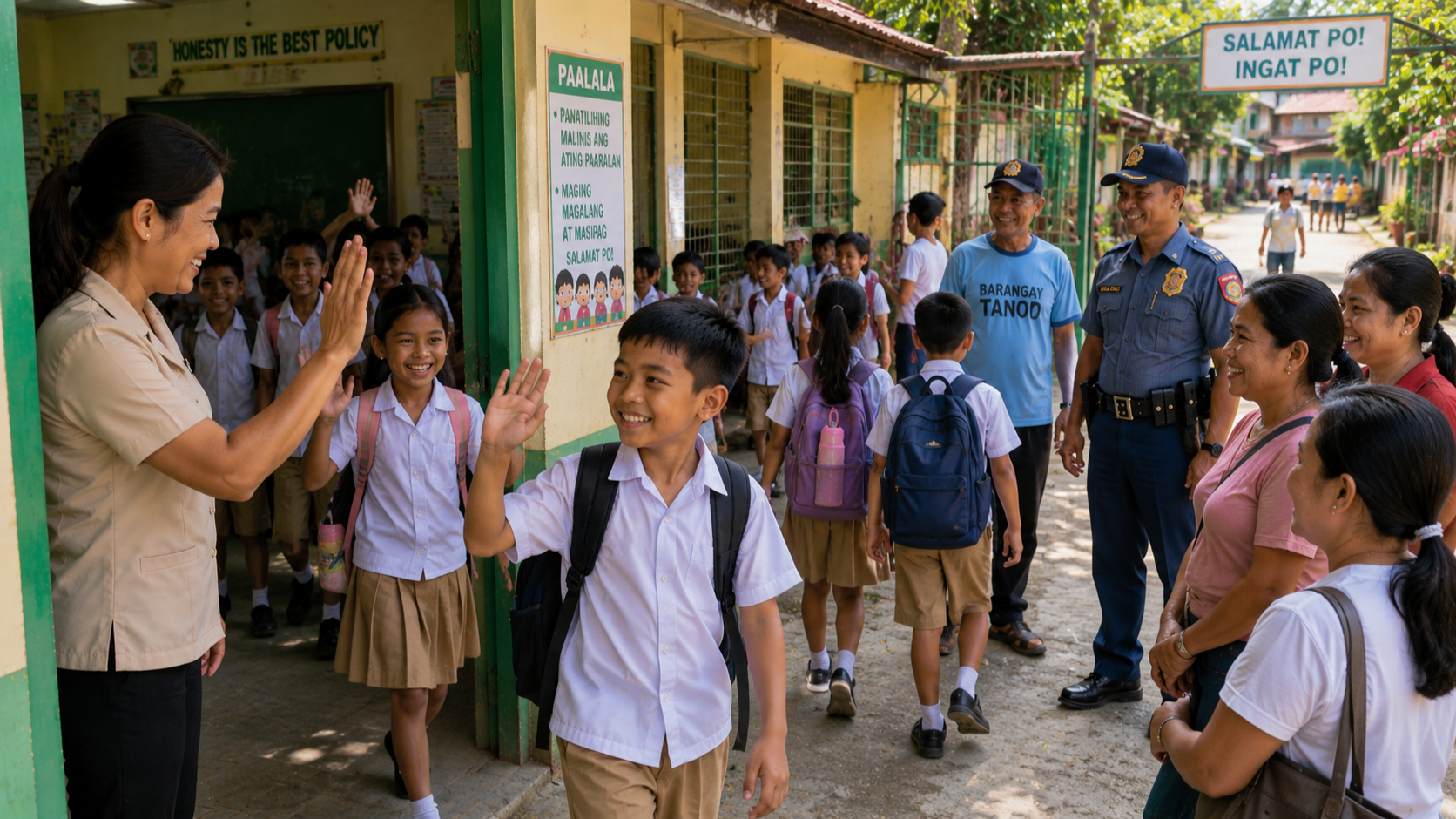
When bullying occurs at school, one question almost always follows: "Who is responsible?" Some blame parents. Others blame teachers. Some blame social media. Others blame video games, society, or the culture. The reality is much more complex. Children do not grow inside a single relationship. They grow inside an ecosystem:
Home
School
Church
Neighborhood
Sports teams
Friends
Media
Social media
Culture
Every environment leaves fingerprints on a child's developing heart, mind, and body. If we truly want to prevent bullying, we must move beyond asking, "Who is to blame?", and begin asking, "How do we become partners in raising healthy human beings?"
Every Adult Is Teaching
Many adults believe they teach only when they speak. Children know differently. Children learn by watching. They notice:
how Dad treats Mom
how Mom handles disappointment
how teachers respond to mistakes
how coaches correct athletes
how pastors speak to volunteers
how leaders treat people with less influence
Children are studying adults every day. They are constantly asking: "Is this what it means to be an adult?" Whether we realize it or not, we are answering that question.
The Invisible Curriculum
Schools have an academic curriculum. Families have a relational curriculum. Churches have a spiritual curriculum. Communities have a cultural curriculum. Most of these are never written down. Yet children absorb them every day. They learn:
how conflict is handled
whether people apologize
whether differences are respected
whether anger becomes violence
whether kindness is admired
whether weakness is mocked
whether mistakes are opportunities to learn or reasons for shame
This invisible curriculum often shapes character more deeply than formal education.
Children Borrow Their Way of Being Human
One of the greatest discoveries in psychology is that children learn through observation, imitation, repetition, and relationship. We say it this way: Children borrow their way of being human from the adults around them -
If adults solve problems by shouting, children borrow shouting.
If adults solve problems through intimidation, children borrow intimidation.
If adults practice empathy, children borrow empathy.
If adults apologize, children borrow humility.
If adults forgive, children borrow grace.
The question is not whether children are learning. The question is: What are they learning?
Consistency Builds Security
Imagine a child hearing the same message everywhere they go -
At home: "You are loved."
At school: "You are respected."
At church: "You are created in God's image."
In the community: "You belong."
Repeated messages become beliefs. Beliefs become identity. Identity shapes behavior. Now imagine receiving different messages everywhere -
At home: "Be tough."
At school: "Don't cause problems."
Online: "Power earns respect."
Among peers: "Fit in at any cost."
The child becomes confused. Healthy development flourishes when the important adults in a child's life communicate similar values.
Bullying Is a Community Problem
Schools alone cannot eliminate bullying. Parents cannot do it alone. Churches cannot do it alone. Counselors cannot do it alone. Communities cannot do it alone. Human development has always been a shared responsibility.
Every adult who influences children contributes to the emotional climate in which they grow. The question is no longer: "Who owns this problem?"
The question becomes: "How do we become part of the solution?"
The Courage to Look in the Mirror
Perhaps one of the bravest questions any adult can ask is: "Am I becoming the kind of person I hope this child becomes?"
That question changes everything. Children do not need adults who are perfect. They need adults who are growing. Adults who can say:
"I was wrong."
"I'm sorry."
"Can you forgive me?"
"Let's learn together."
Those moments teach emotional intelligence better than any lecture. Children remember authenticity.
A Biblical Perspective
In Deuteronomy 6:6–7, God gave Israel a beautiful picture of human formation: “These commandments that I give you today are to be on your hearts. Impress them on your children. Talk about them when you sit at home and when you walk along the road, when you lie down and when you get up."
Children rarely become what we tell them to become.
They become what they repeatedly experience. If a child grows up experiencing respect, respect becomes familiar. If a child repeatedly experiences empathy, empathy becomes natural. If a child grows up in emotionally safe relationships, their nervous system begins to understand what safety feels like.
But if children repeatedly experience criticism, humiliation, fear, or indifference, those experiences also become familiar. Human beings are constantly adapting to the environments in which they live.
We Are All Raising Every Child
Whether we realize it or not, we are all helping raise every child -
The cashier who smiles.
The crossing guard who waves.
The janitor who learns students' names.
The coach who encourages.
The neighbor who listens.
The teacher who notices.
The principal who protects.
The grandparent who tells stories.
Every interaction leaves an impression. Children are constantly collecting evidence about the kind of world they live in.
Is it safe?
Can people be trusted?
Do I matter?
Will someone help me?
These questions are answered thousands of times through ordinary human interactions.
The Ripple Effect
A teacher's kindness reaches beyond one student. That student goes home differently. The family experiences a different child. Friends experience a different classmate. One emotionally healthy interaction creates another. Like ripples spreading across a quiet lake, compassion has a way of traveling farther than we can see.
The opposite is also true. Cruelty spreads. Fear spreads. Shame spreads. Every adult helps determine which ripple grows larger.
A Vision for Our Schools
Imagine schools where every adult share one common mission: Not simply educating minds but developing human beings. Imagine classrooms where students are intentionally taught:
self-awareness
emotional regulation
empathy
healthy communication
gratitude
courage
conflict resolution
forgiveness
responsibility
compassion
Imagine every adult speaking the same emotional language. Children would hear consistent messages. They would experience consistent expectations. They would begin building consistent habits. Culture would slowly begin to change.
Beyond Bullying
Perhaps bullying is only one symptom. Perhaps the deeper issue is that many children have never been intentionally taught how to build healthy relationships. We teach reading, mathematics, science. Shouldn't we also teach children how to:
disagree respectfully?
apologize sincerely?
repair broken relationships?
regulate strong emotions?
encourage one another?
become trustworthy?
resolve conflict peacefully?
These are not optional life skills. They are human skills. And human skills shape every family, workplace, church, and community our children will one day enter.
Years from now, our children may forget many of the lessons we taught. They may forget formulas, historical dates, vocabulary words, even some classroom activities.
But they will never forget how the adults in their lives made them feel. They will remember who believed in them, protected them, listened to them, encouraged them, who modeled integrity and treated every person with dignity.
In the end, education is not only about preparing children for exams, it is about preparing them for life. Life is lived in relationships; relationships are built on character. And character is formed one interaction at a time.
Perhaps the greatest contribution we can make to the next generation is not simply teaching children to succeed. Perhaps it is helping them become the kind of human beings who make the world safer, kinder, wiser, and more compassionate than the one they inherited.
This is our vision - not simply preventing bullying. But developing a generation that no longer sees bullying as a way of life because they have learned a better way to be human.