Beyond Bullying: The Kind of Society We Are Building
When we began this series, we asked a simple question: "How do we stop bullying?"
It was the right question. But after exploring the lives of children, families, teachers, classrooms, and communities, perhaps we have discovered an even deeper question: "What kind of human beings are we helping our children become?"
Because every lesson we teach, every relationship we build, every classroom we create, every conflict we resolve, every act of kindness we celebrate is quietly answering that question. Bullying is not the destination of this conversation. Human flourishing is.
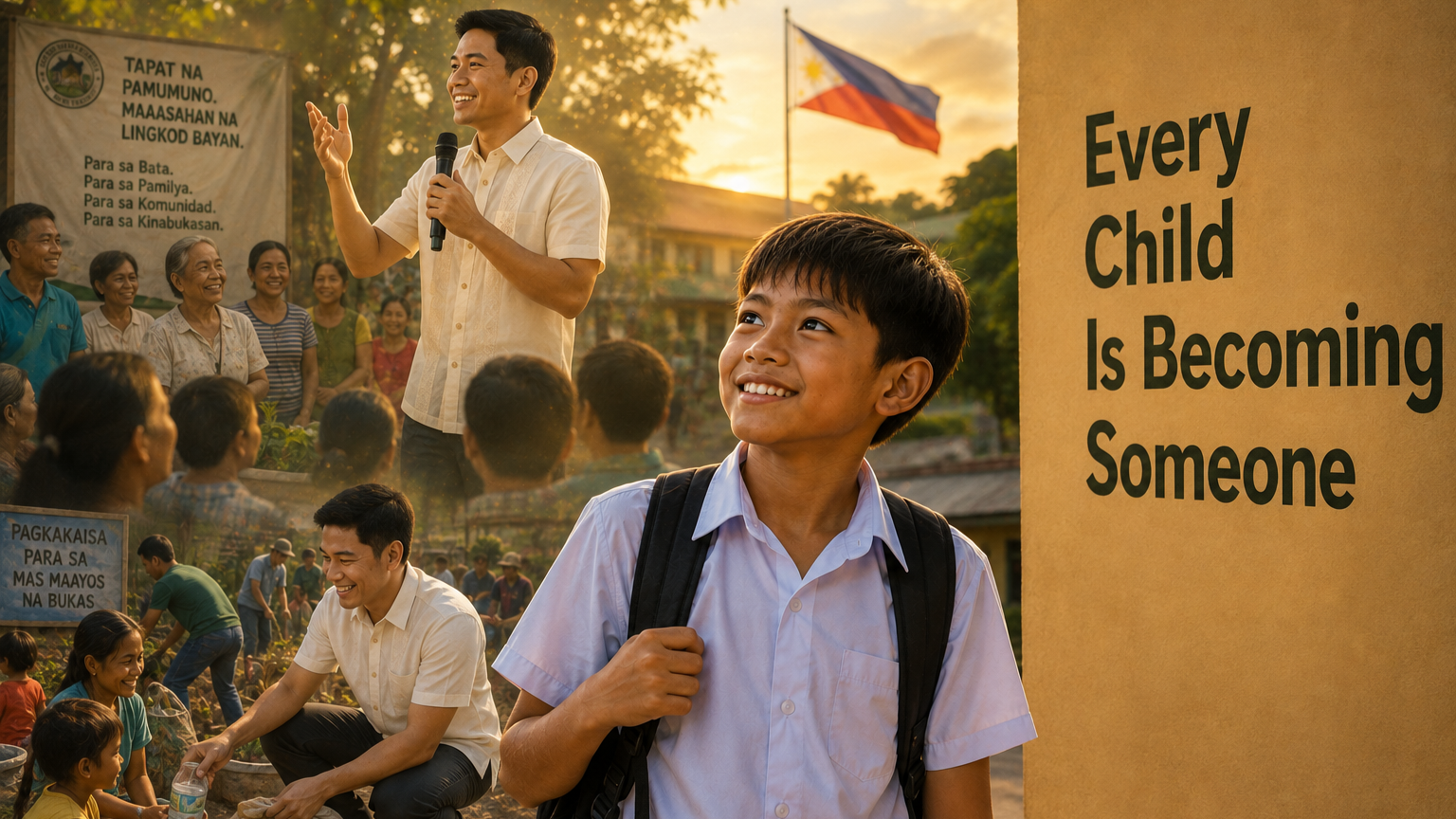
Every Child Is Becoming Someone
Every sunrise brings another opportunity for growth. Children are constantly becoming. Not only academically, but emotionally, socially, morally, spiritually, and relationally.
Whether intentionally or unintentionally, every environment is shaping the adult that child will one day become. The question is not whether children are developing. The question is: Who are they becoming?
Education Is More Than Information
For generations, education has been measured by what children know.
Can they read?
Can they solve equations?
Can they remember historical facts?
These questions matter. Knowledge opens doors. But knowledge alone cannot build healthy societies. A brilliant mind without compassion can still wound others. A gifted leader without integrity can still misuse power. A successful professional without empathy can still leave broken relationships behind.
Education should prepare children not only for employment. It should prepare them for life.
Character Is Society's Invisible Infrastructure
Every nation invests in physical infrastructure: roads, bridges, airports, hospitals, technology. These are important. But beneath every thriving society is another kind of infrastructure: human infrastructure --
Trust.
Integrity.
Compassion.
Responsibility.
Courage.
Empathy.
Respect.
These qualities cannot be poured into concrete. They must be developed in people. When human infrastructure weakens, every institution eventually feels the strain —
Schools struggle.
Families struggle.
Businesses struggle.
Communities struggle.
Nations struggle.
Healthy societies are built from the inside out.
Children Learn the Culture We Create
Children rarely become the people we hope for by accident. They become the people their environments repeatedly invite them to become.
If children grow up surrounded by fear, they may learn fear.
If they grow up surrounded by criticism, they may learn criticism.
If they grow up surrounded by compassion, they learn compassion.
Culture is never passive. Culture is always teaching. That is why every classroom, every family, every church, and every community matters.
Small Moments Change History
History is often told through great leaders and great events. But history is also shaped through ordinary moments —
A teacher who notices the lonely student.
A father who apologizes to his child.
A mother who patiently listens instead of reacting.
A classmate who chooses kindness over ridicule.
A principal who protects dignity.
A coach who values character more than winning.
These moments rarely make headlines. Yet they quietly shape generations. Civilizations are built one relationship at a time.
The Long View
Imagine two children:
One grows up believing: "The strongest person wins."
The other grows up believing: "The strongest person serves."
Imagine one child learning: "Power earns respect."
Another learning: "Character earns trust."
Imagine one child believing: "People are threats."
Another believing: "People are gifts."
Those beliefs will influence marriages, parenting, leadership, business, government, communities. Long after school has ended. This is why childhood matters so deeply.
Our Vision
It has never been simply about emotional intelligence. It has always been about developing the whole human being:
Mind
Body
Spirit
Relationships
Character
Purpose
We believe emotional intelligence is not an end in itself, it is a pathway toward becoming more fully human —
A child who understands emotions is more likely to understand people.
A child who learns empathy is more likely to build peace.
A child who learns self-awareness is more likely to live intentionally.
A child who learns courage is more likely to stand beside the vulnerable.
This is the kind of generation we hope to help develop.
A Future Worth Building
Imagine a generation that naturally asks:
"How can I help?"
"What might this person be feeling?"
"How can we solve this together?"
"What kind of person do I want to become?"
Imagine schools where children compete in kindness as much as achievement. Imagine communities where empathy is admired. Imagine leaders whose greatest strength is integrity. Imagine families where emotional health is nurtured as intentionally as academic success.
This is not a dream beyond our reach. It begins with one child, one family, one classroom, one teacher, one conversation, one act of courage, one choice to love rather than harm.
A Good Reflection
Perhaps the greatest question we can ask is not: "How do we stop bullying?"
Nor is it simply: "How do we improve education?"
Perhaps the greatest question is this: "What kind of humanity will we leave behind?"
Every child we influence becomes part of that answer. Every lesson we teach becomes part of that answer. Every relationship we nurture becomes part of that answer.
We believe that the future of our communities, our nations, and our world will not be determined only by the intelligence of the next generation. It will also be determined by their character, by their compassion, by their courage, by their capacity to build relationships, by their willingness to protect the vulnerable, by their commitment to becoming fully human.
If we intentionally develop these qualities in our children today, we will not simply reduce bullying. We will strengthen families. We will enrich schools. We will build healthier communities. We will restore trust.
And we will leave behind a world that is kinder, wiser, more resilient, and more compassionate than the one we inherited.
This is our vision - not merely changing behavior, not merely improving education. But helping shape a generation that knows how to build a better humanity.
And perhaps, there is no greater calling than that.