
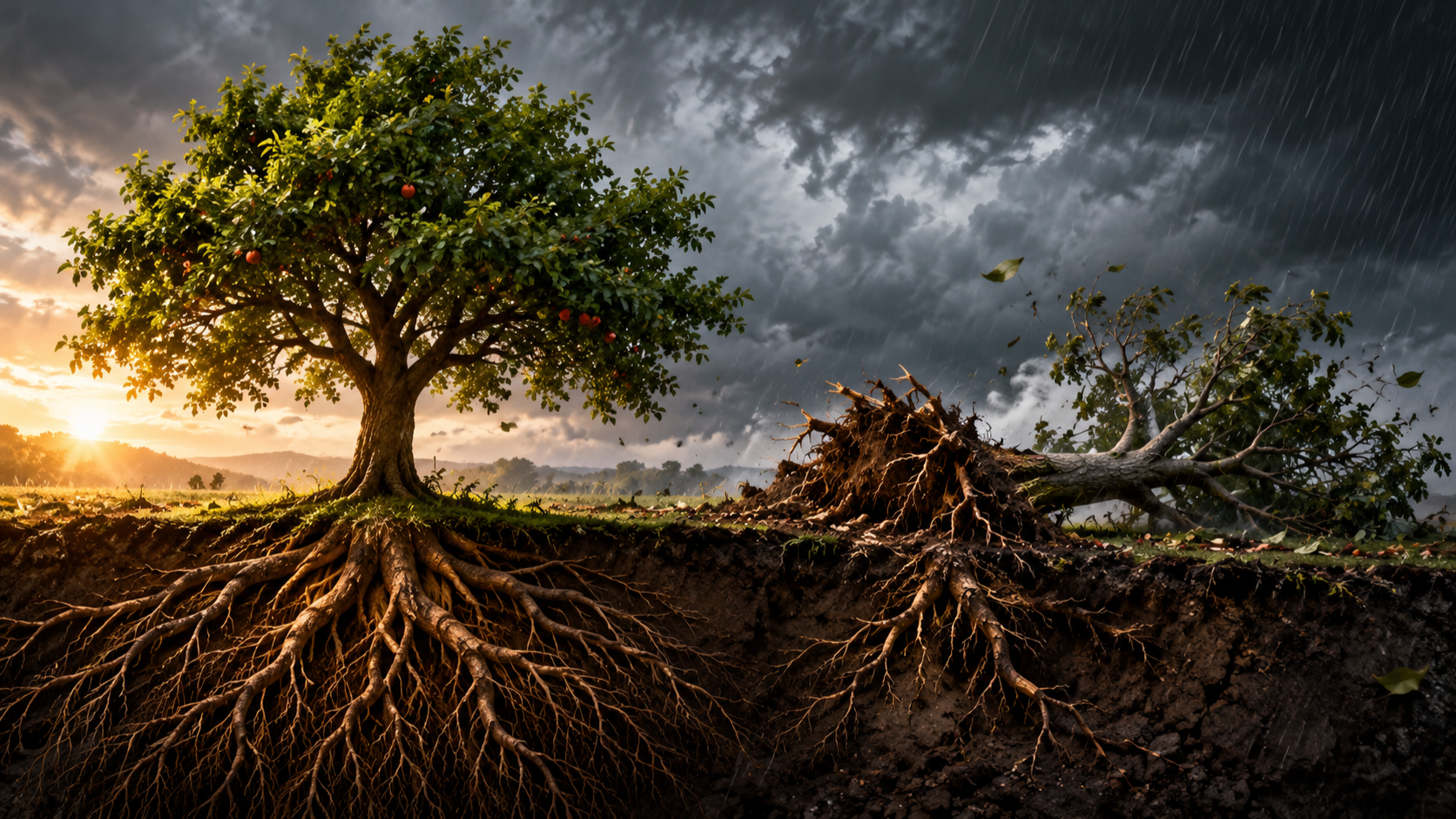
Imagine two trees standing side by side. Both appear healthy. Both appear strong. Both produce fruit. Then a storm arrives - strong winds, heavy rain, intense pressure. After the storm passes, one tree remains standing. The other falls. What made the difference? The answer was not visible from the outside. The answer was hidden beneath the surface. The roots.
Character works much the same way. It develops quietly. Often unnoticed. Often uncelebrated. Yet when life applies pressure, character determines whether we stand firm or fall. This is why character is one of the most important silent partners in human development.
Character Is What Remains
Many things can change. Circumstances change. Positions change. Finances change. Health changes. Relationships change. But character remains remarkably consistent.
Character is not what we do occasionally. Character is who we become repeatedly. It is the accumulation of thousands of small choices. Choices made when no one is watching. Choices made when recognition is absent. Choices made when shortcuts are available. Character is built long before it is tested.
The Myth of Instant Character
Modern culture often celebrates quick results. Instant communication. Instant information. Instant gratification.
Character develops differently. Character grows slowly. Like roots. Like muscles. Like wisdom. It cannot be rushed. Every act of honesty strengthens integrity. Every act of patience strengthens self-control. Every act of courage strengthens resilience. Character is formed through repetition, not declarations.
Success Reveals Character
Many people assume adversity reveals character. It does. But success reveals character as well. Adversity tests strength. Success tests humility. Adversity tests perseverance. Success tests integrity.
Adversity asks: "Will you continue?"
Success asks: "Will you remain grounded?"
Some people are changed by hardship. Others are changed by success. Both reveal what is happening beneath the surface.
The Relationship Between Character and Emotional Intelligence
Character and emotional intelligence are deeply connected. Self-awareness helps us recognize our weaknesses. Self-regulation helps us act according to values rather than impulses. Empathy helps us consider the needs of others. Conscience helps us discern right from wrong.
Without emotional intelligence, character development becomes difficult. Without character, emotional intelligence loses direction. Together they help shape mature human beings.
Habits Become Character
One of the most powerful truths about character is this: Small actions become habits. Habits become patterns. Patterns become character. Character becomes destiny. People rarely wake up one day and become patient, or trustworthy, or compassionate. Those qualities are cultivated over time. The same is true for negative patterns. Small compromises accumulate. Repeated dishonesty accumulates. Uncontrolled anger accumulates. The direction of our daily choices matters.
Character Under Pressure
Pressure has a unique ability to expose what lies beneath the surface. When people are tired, stressed, frustrated, or afraid, their deepest habits emerge. This is why emotional regulation matters so much. Pressure often reveals whether a person has learned:
To pause before reacting
To listen before judging
To reflect before speaking
To choose principles over impulses
Character is not demonstrated when conditions are easy. Character becomes visible when conditions are difficult.
The Invisible Reputation
Many people spend years building a public reputation. Character builds a private reputation. Reputation is what people think about us. Character is who we actually are.
Ideally, the two align. But they are not always the same. A person can appear successful while privately struggling with integrity. A person can appear ordinary while possessing extraordinary character. One is visible. The other is foundational.
The Influence of Character
Character influences every relationship. Trust is built upon character. Leadership is sustained by character. Families are strengthened by character. Communities depend upon character. When character is strong, people become dependable. When character is weak, instability follows.
This is why societies require more than intelligence. They require character. Knowledge tells us what we can do. Character helps determine what we should do.
The Classroom of Character
Character is not developed only through major life events, it is developed in ordinary moments - returning a lost item, telling the truth, admitting a mistake, showing kindness, or keeping a promise. These moments may seem small, yet they are shaping who we become. Every day provides opportunities to strengthen character. The classroom is not only a place where students learn mathematics and science, it is also a place where character is formed.
The Biblical Perspective
Scripture consistently places character above achievement. Again and again, we see the emphasis on: integrity, humility, faithfulness, self-control, love, wisdom. God appears far more concerned with who people are becoming than with what they possess.
This does not diminish accomplishment. It places accomplishment in proper perspective. Character gives achievement its meaning. Without character, success can become dangerous. With character, success becomes stewardship.
Character and Conscience
Perhaps the deepest connection is between character and conscience. Conscience provides guidance, character determines whether we follow it. Most people know more right things than they consistently practice. The challenge is not usually knowledge; the challenge is alignment. Character develops when behavior increasingly aligns with conscience. When what we believe and what we do become more consistent. This is integrity.
The Legacy We Leave
At the end of life, people may remember accomplishments. But they often remember character more. Was this person trustworthy? Kind? Honest? Compassionate? Faithful? Courageous?
Character leaves a legacy long after achievements are forgotten. Children remember character. Families remember character. Communities remember character. Character outlives many accomplishments.
Our Vision
It is not simply preparing students for careers; it is preparing students for life. A resilient generation requires more than intelligence, it requires character. The goal is not merely to produce successful individuals. The goal is to cultivate individuals who are:
Conscience-driven
Highly empathic
Emotionally regulated
Solution-focused
People whose inner character supports their outer achievements.
The world often asks: "What have you achieved?"
Wisdom asks: "Who are you becoming?"
Achievements matter. Goals matter. Success matters. But character determines how those gifts are used. Character grows quietly, choice by choice, day by day, moment by moment.
It rarely demands attention. It rarely receives applause. Yet it influences every relationship, every decision, every leadership role, and every legacy. This is why character is the silent partner in human development. Invisible beneath the surface.
Quietly strengthening the roots. And preparing us to withstand the storms that inevitably come. Because in the end, what we achieve may open doors, but who we become determines what happens once we walk through them.