
The Silent Partner in Society: How Individual Nervous Systems Shape Communities and Nations
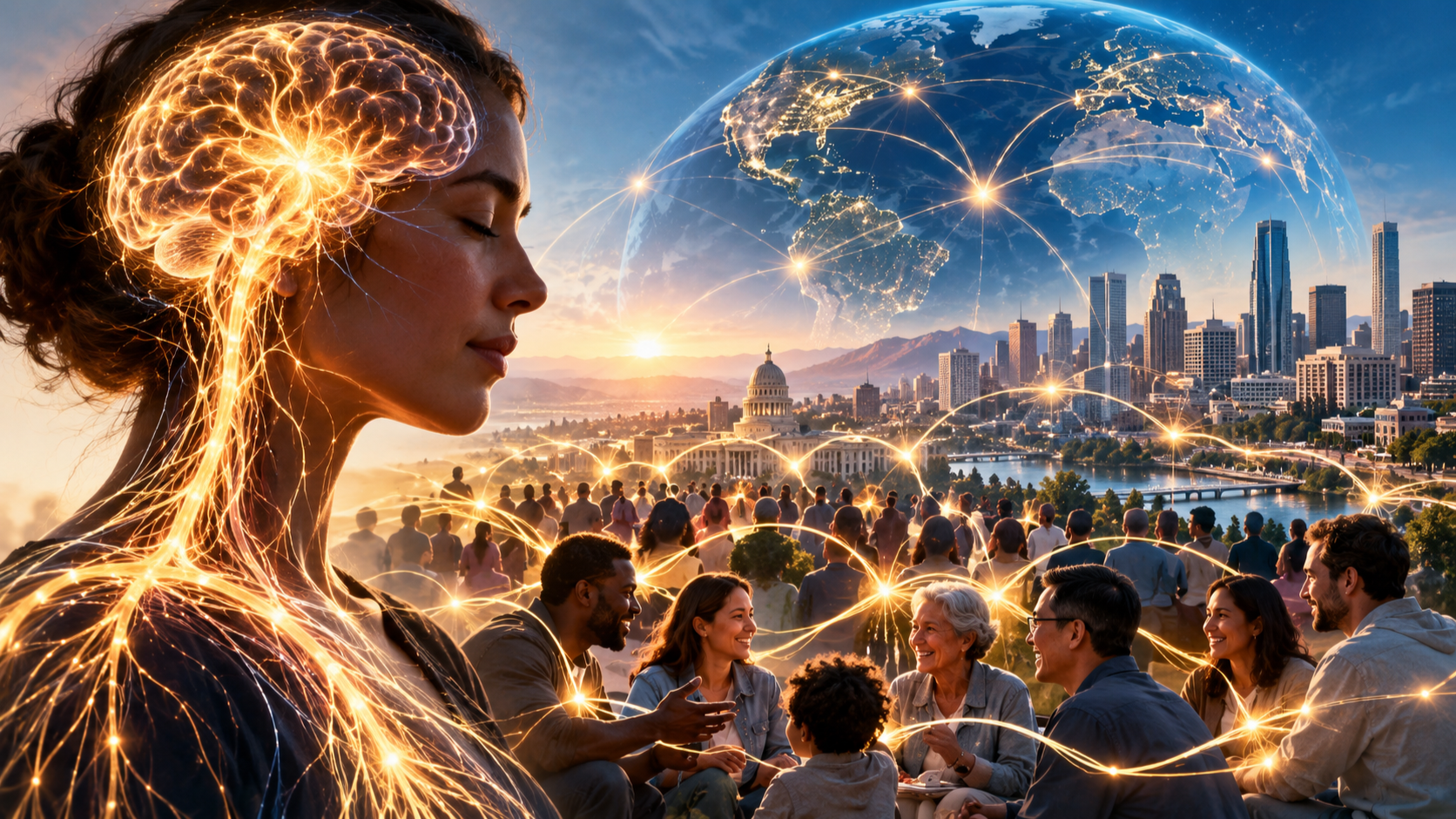
When people think about society, they often think about governments, laws, economies, schools, and institutions. These things are important. But society is ultimately built from something much smaller - human beings, every community, every workplace, every classroom, every church, every government office, every family - consists of people interacting with one another. And every one of those people carries a nervous system, a set of beliefs, emotional memories, life experiences, hopes, fears, and habits.
Society is not merely a collection of structures. It is a collection of human beings, and human beings influence one another constantly. This is why emotional intelligence is the silent partner in society.
Society Is a Reflection of Its People
We often speak about social problems as though they exist independently: crime, violence, corruption, bullying, polarization, distrust. But these issues do not emerge from nowhere. They emerge through human behavior. And behavior is influenced by emotions, beliefs, relationships, and experiences.
A society cannot be healthier than the people who create it. Just as a forest is made up of individual trees, a society is made up of individual human beings. Healthy individuals contribute to healthier communities. Dysregulated individuals contribute to dysregulated systems.
The Ripple Effect
Imagine dropping a small stone into a still pond - the ripples spread outward. The same principle applies to human behavior. A parent's emotional regulation influences a child. That child influences classmates. Classmates influence a school. Schools influence communities. Communities influence society.
Every action creates consequences beyond what we immediately see. A single act of kindness may ripple farther than we realize. So can a single act of cruelty. The ripples never remain isolated.
Emotional Contagion Beyond the Individual
Earlier in this series we explored emotional contagion. Emotions spread. This happens not only between individuals. It happens across entire groups. Fear spreads. Anger spreads. Panic spreads. Hope spreads. Calm spreads. Compassion spreads.
We saw this during public crises. We see it on social media. We see it in neighborhoods. We see it in organizations. Human beings influence one another emotionally whether they intend to or not. This means that emotional intelligence is not merely a personal skill. It is a social responsibility.
When Dysregulation Becomes Cultural
One of the most concerning realities of modern society is that dysregulation can become normalized. People become accustomed to: constant outrage, constant fear, constant conflict, constant anxiety, constant division.
Eventually these patterns begin to feel normal. But normal does not always mean healthy. A dysregulated culture often produces: reactive decision-making, poor listening, polarization, blame, distrust, short-term thinking. When enough individuals operate from survival mode, entire communities begin operating from survival mode.
The Missing Human Infrastructure
Societies invest heavily in physical infrastructure: roads, bridges, buildings, technology, utilities. These are important. But there is another form of infrastructure that is often neglected - Human infrastructure: trust, empathy, conscience, self-control, cooperation, emotional regulation.
These invisible qualities determine whether systems function effectively. A bridge may connect two cities. Trust connects people. A road may move resources. Empathy moves relationships. Without healthy human infrastructure, physical infrastructure alone cannot solve social problems.
The Role of Conscience
A healthy society depends upon conscience. Laws can influence behavior. Conscience influences character. Laws tell us what we must do. Conscience helps us understand what we ought to do. When conscience is strengthened, people become less dependent on external control. They begin governing themselves. This is one reason Project 12 places such importance on emotional intelligence and conscience development. The goal is not merely compliance. The goal is wisdom.
Why Education Matters So Much
Many people view education primarily as academic preparation. But education also shapes citizens - future parents, future leaders, future voters, future employers, future community members.
Every child sitting in a classroom today will someday influence society. The question is: What kind of society will they help create? A generation that learns self-awareness, self-regulation, empathy, social responsibility and conscience-guided decision making will contribute differently than a generation that never develops those skills. Education is one of society's most powerful tools for shaping the future.
Our Vision
We often speak about developing a resilient generation. Why? Because resilience is not merely an individual trait. Resilience strengthens families. Families strengthen communities. Communities strengthen nations.
The vision extends far beyond emotional management. The vision is to cultivate a generation that is:
Conscience-driven
Highly empathic
Solution-focused
Emotionally regulated
Socially responsible
These qualities do not simply improve individual lives. They improve society itself.
The Biblical Perspective
Scripture consistently connects personal character with societal well-being. The prophets understood that injustice begins in the human heart. Jesus understood that transformation begins within before it appears outwardly. The command to love your neighbor was never merely personal. It was societal. A society filled with people who love their neighbors’ functions differently from one filled with suspicion and hostility.
Peace in society often begins with peace within individuals. The external world frequently reflects the condition of the internal world.
The Future We Are Building
Every generation inherits a society. Every generation also contributes to shaping the next one. The question is not whether we are influencing the future, we are. The question is how. Will we pass on fear or resilience? Division or understanding? Reactivity or wisdom? Self-interest or empathy? The answer depends largely on what we cultivate today.
Society is often described through institutions, policies, and systems. But beneath every system is a human being. Beneath every decision is a belief. Beneath every behavior is an emotional process. And beneath every community is an invisible network of relationships, trust, conscience, and emotional influence.
This is why emotional intelligence is the silent partner in society. Quietly shaping conversations. Quietly influencing decisions. Quietly affecting families, schools, organizations, and governments. And quietly determining whether communities move toward conflict or cooperation, fear or resilience, division or flourishing.
A resilient society begins with resilient people. And resilient people are not born by accident. They are developed…one child, one family, one classroom, one community at a time.