
The Invisible Wounds of the Bullied Child: When the Bullying Ends, the Healing May Only Be Beginning
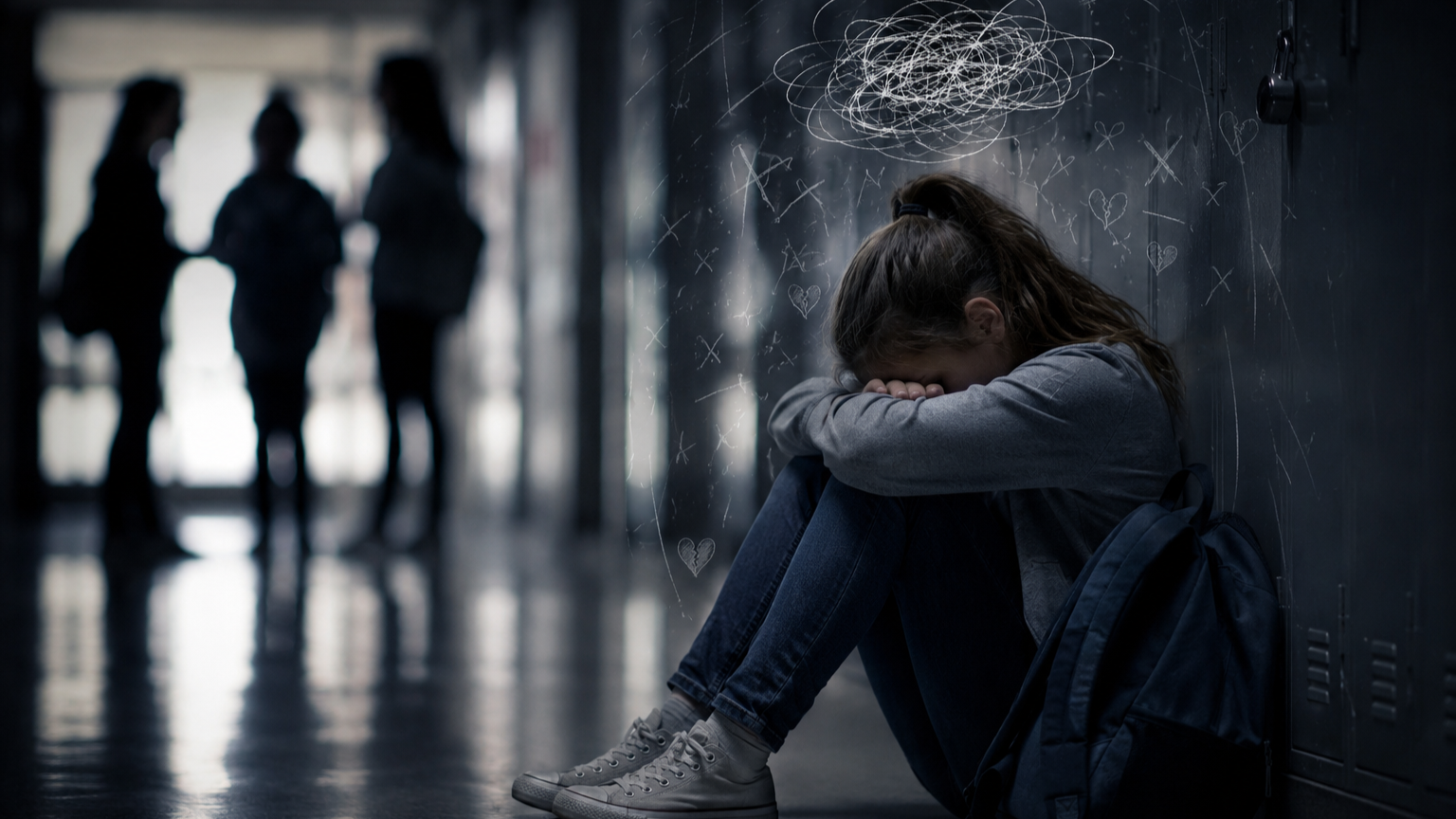
When we think about bullying, we often focus on what we can see - the teasing, the pushing, the insults, the exclusion, the humiliation - these are the visible injuries. But the deepest wounds are often invisible.
Long after the bullying has stopped, many children continue carrying what happened inside them - the classroom moves on, friends move on, even the bully may move on. But the child's nervous system often does not.
More Than Hurt Feelings
Bullying is not simply about hurt feelings. It is about repeated experiences that teach the brain and body how to understand the world. Imagine hearing day after day:
"You're stupid."
"No one likes you."
"You don't belong."
"You're weird."
"You'll never be good enough."
Children are still developing their identity. They naturally begin asking: "What if they're right?"
Over time, someone else's words can slowly become a child's own inner voice.
The Birth of a Negative Narrative
One of the greatest dangers of bullying is not only the event itself. It is the story that begins afterward. A child may start believing:
"I'm not enough."
"I don't belong."
"I'm different."
"I'm unlovable."
"I'm weak."
"No one will protect me."
The bullying may stop. But the story continues, sometimes for decades. This is why healing requires more than removing the bully. It also involves helping the child rewrite the narrative.
The Body Learns Fear
Project 12 teaches that human beings are whole beings: Spirit. Mind. Body. Bullying affects all three.
A child who repeatedly experiences fear may begin living in a state of constant alertness. The body quietly asks:
"Am I safe?"
"Will it happen again?"
"Who can I trust?"
Even when no immediate danger exists, the nervous system may continue preparing for one. This is not weakness. It is adaptation. The body is trying to protect the child.
When School No Longer Feels Safe
Imagine trying to learn multiplication while wondering whether someone will mock you at recess. Imagine reading a book while scanning the room to see who might laugh. Imagine giving a class presentation while your heart races with fear.
The brain cannot fully focus on learning when it is focused on surviving. This is why bullying affects not only emotional health but academic performance as well. Safety is the foundation upon which learning is built.
How Bullying Shows Up Years Later
Sometimes adults say: "That happened years ago."
But emotional experiences do not always disappear simply because time has passed. Some adults who were bullied as children still struggle with:
anxiety
perfectionism
people-pleasing
fear of rejection
difficulty trusting others
low self-esteem
avoiding conflict
remaining silent even when they have something valuable to say
These are not character flaws. Often, they are survival strategies that once protected a child. The problem is that strategies designed for survival can become barriers to flourishing.
Emotional Literacy Changes the Story
One of the greatest gifts we can offer bullied children is helping them understand what is happening inside them. Instead of saying: "Just ignore them."
We can ask:
"What are you feeling?"
"What happened today?"
"What did those words make you believe?"
"What do you need right now?"
When children have language for their emotions, they become less likely to carry those emotions alone. Being understood is often the beginning of healing.
The Healing Power of Safe Adults
Research and experience continue to show that one emotionally safe adult can significantly influence a child's life -
Sometimes healing begins with a teacher.
Sometimes a parent.
Sometimes a grandparent.
Sometimes a coach.
Sometimes a counselor.
Children heal in relationships. A caring adult cannot erase what happened. But they can help create new experiences that teach the child:
"You matter."
"You are safe."
"You are capable."
"You are not alone."
Those messages slowly become part of the child's new story.
A Biblical Perspective
Throughout the Gospels, Jesus consistently noticed those whom others ignored. He saw the overlooked. The rejected. The excluded. He moved toward people carrying invisible wounds.
In Psalm 34:18 we read: "The Lord is close to the brokenhearted and saves those who are crushed in spirit."
What a comforting reminder. God not only sees outward behavior. He also sees hidden pain. Perhaps we are called to do the same.
We believe that preventing bullying is important. But helping children heal is equally important. Healing begins by creating emotionally safe environments where children can:
express emotions
build healthy relationships
develop confidence
learn emotional regulation
experience empathy
discover their value
The goal is not simply helping children survive school. The goal is helping them flourish in life.
Bullying leaves marks that are not always visible. Some wounds cannot be seen with our eyes, but they can be felt for years. As educators, parents, and community leaders, perhaps one of the greatest gifts we can offer is this: To become the safe person a child desperately needs.
Because one caring relationship has the power to interrupt fear. One encouraging voice can begin replacing years of criticism. One emotionally healthy adult can help rewrite a child's story. And sometimes, that is where healing truly begins.