
What Bullying Teaches the Children Who Simply Watch
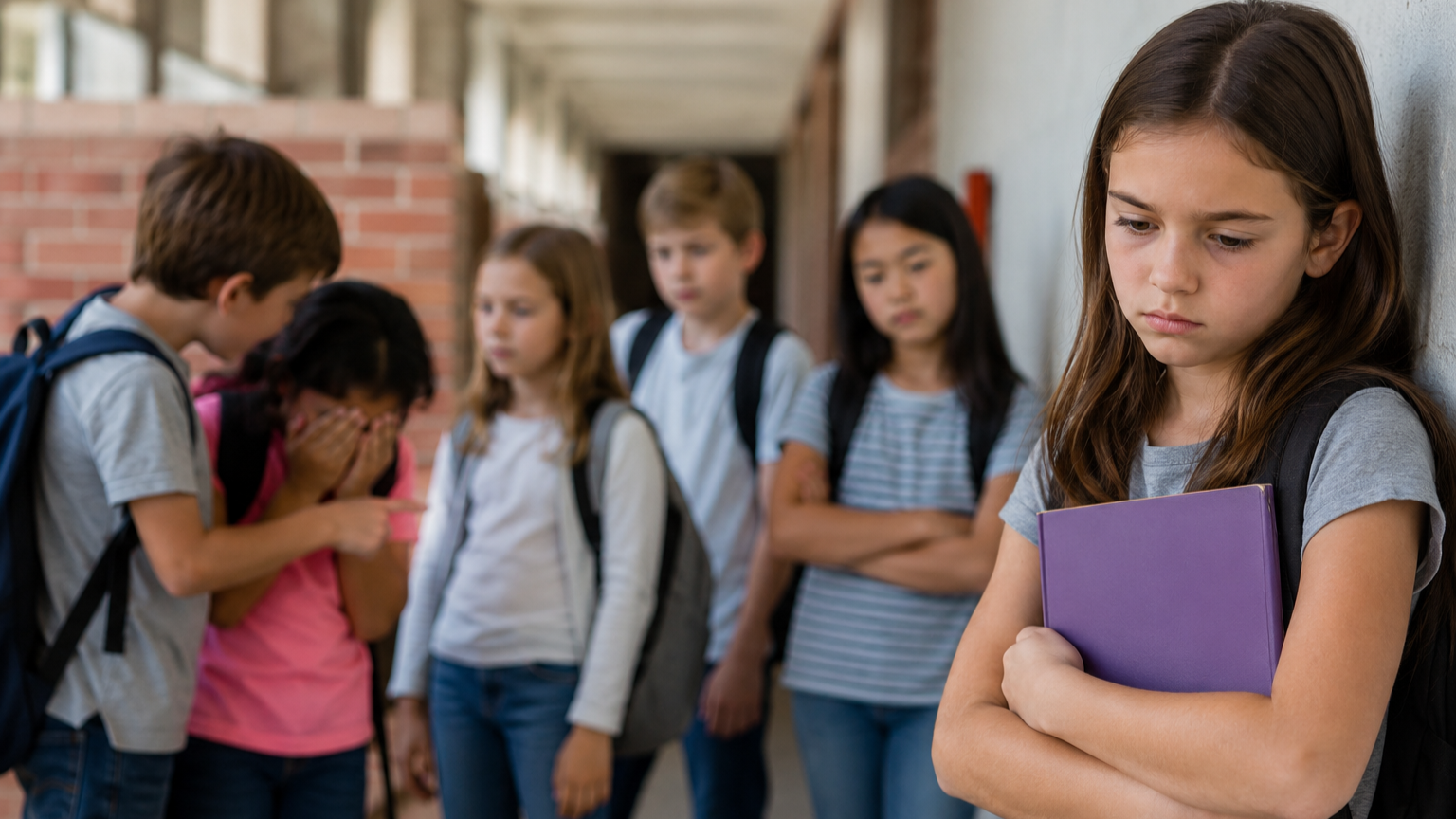
When bullying occurs, our attention naturally turns to two children. The child doing the bullying and the child being bullied. Both deserve our attention. Both need guidance. Both need support.
But there is another group that often goes unnoticed - the children who simply watch, the bystanders. Ironically, they may represent the largest group in every bullying incident. And they are learning something too.
Every Child Is Learning
Imagine a classroom where one student is repeatedly teased. Twenty-five other students witness it. Only one child is being bullied. Or is that really true? We suggest something different. Every child present is receiving a lesson. The question is: What lesson are they learning?
The Silent Classroom
Children rarely remain neutral. Even when they say nothing. Even when they look away. Even when they pretend not to notice. Their brains are quietly making conclusions.
Some may think: "If I speak up, I'll become the next target."
Others conclude: "Adults don't notice."
Some learn: "It's safer to stay quiet."
Others begin believing: "This must be normal."
Without realizing it, the classroom itself begins developing an emotional culture.
Bullying Creates More Than Victims
It creates observers. Observers become learners. Learners become future participants. Some eventually become defenders. Some become future victims. Some become future bullies. Some become adults who stay silent whenever they witness injustice. Not because they are uncaring, but because silence became familiar.
The Psychology of Silence
One of the fascinating realities of human behavior is this: The more people who witness something, the less likely each individual feels personally responsible to act.
Someone else will help. Someone else will speak. Someone else will tell the teacher. Sometimes...no one does. Children experience this too. Which means courage often needs to be taught.
Fear Is Contagious
But so is courage. When one child laughs at bullying, others often follow. When one child speaks up, others often gain courage. Cultures spread. Children constantly observe what is rewarded. If cruelty gains attention, cruelty grows. If kindness gains respect, kindness spreads. Culture is always teaching.
What the Nervous System Learns
The nervous system constantly asks: "Am I safe?"
Children watching bullying are asking that question too. Many begin scanning the environment:
Could I be next?
Should I stay invisible?
Should I avoid attention?
Some children become quieter. Some become anxious. Some become hypervigilant. Not because they were bullied, but because they witnessed fear. The nervous system learns from observation as well as experience.
Emotional Literacy Gives Children Options
Imagine two students witnessing the same bullying incident. One has never learned emotional literacy. The other has learned to recognize:
Fear
Empathy
Courage
Responsibility
Which child is more likely to intervene? Emotional literacy gives children choices. Without emotional awareness, fear often decides. With emotional awareness, values can begin leading.
Teachers Shape the Culture
Every response from a teacher sends a message. Children notice:
Does the teacher protect students?
Does the teacher ignore teasing?
Does the teacher embarrass students?
Does the teacher model respect?
The teacher is not simply teaching mathematics. The teacher is teaching what kind of community this classroom will become. Children are always watching.
A Biblical Perspective
In the Parable of the Good Samaritan (Luke 10:25–37), three people encountered the wounded man. One caused harm. Two passed by. One stopped. Most discussions focus on the Samaritan's compassion.
But notice something else - everyone made a choice. Some acted. Some remained silent. The story reminds us that love is not only avoiding harm. Love also chooses to respond. Sometimes kindness is not simply what we do - it is what we refuse to ignore.
A Good Reflection
Bullying prevention involves developing every child in the classroom. Not only the child who bullies. Not only the child being bullied. But every child watching.
Because every observer is becoming the kind of adult they will one day become. Will they become someone who stays silent? Or someone who protects others? That question begins being answered in childhood.
Perhaps the greatest opportunity in every bullying incident is not simply stopping the behavior - it is shaping the culture. Imagine classrooms where children naturally ask:
"Who needs encouragement today?"
"Who is sitting alone?"
"Who needs a friend?"
"What can I do to make someone feel included?"
Imagine if courage became contagious. Imagine if kindness became the classroom norm. Imagine if every child understood: "I have the power to influence the culture around me."
Perhaps that is one of the greatest lessons education can teach. Because the children quietly watching today will become the leaders, parents, teachers, pastors, business owners, and citizens of tomorrow.
And what they learn about courage in childhood they will carry into the rest of their lives.