
The Power of Unlearning: Why Letting Go Is the Hardest—and Most Transformative—Work of Adulthood
We spend the first half of our lives learning—absorbing information, rules, beliefs, emotional patterns, and cultural norms. We learn from parents, teachers, our environment, and the society that surrounds us. And because we learn while our hearts and minds are still forming, these teachings settle deep inside us, often unquestioned.
Some of these lessons give us strength. Some give us structure. Some protect us. But many of them… we eventually discover are incomplete, misguided, or simply untrue.
This is where the power of unlearning enters our story.
Why Unlearning Matters More Than Ever
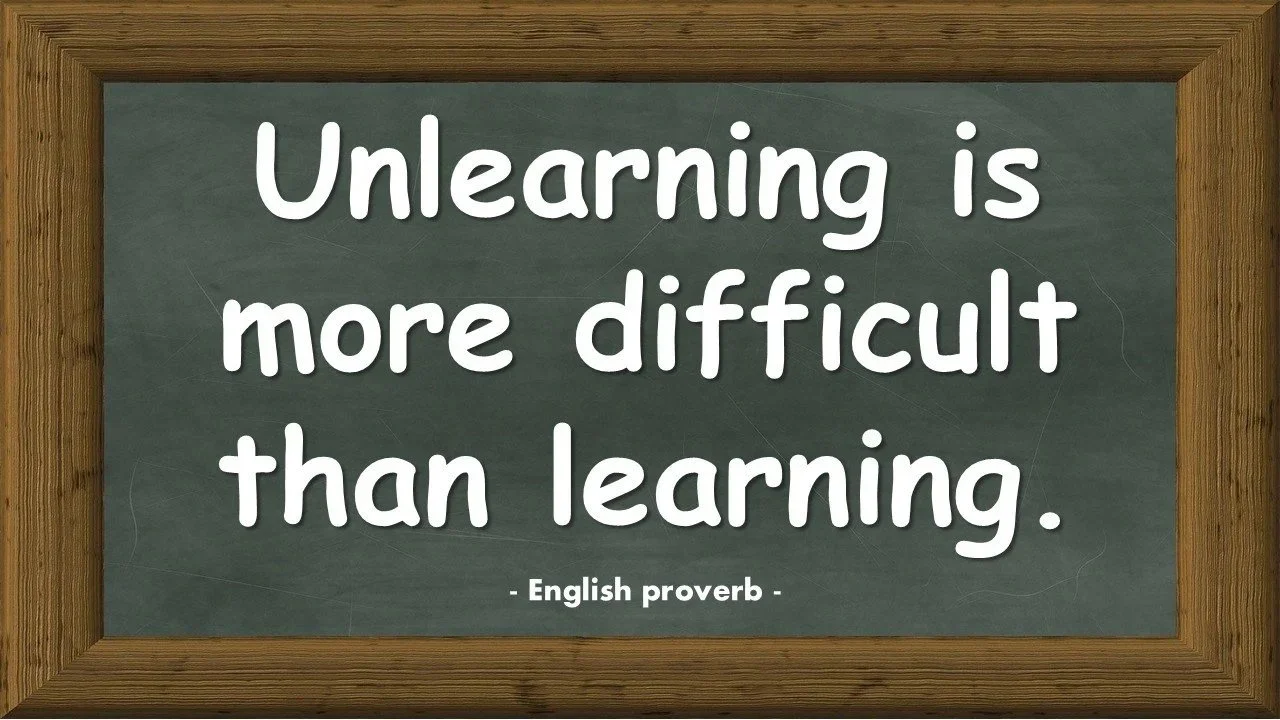
There is a common belief that as adults, the real challenge is learning something new. But the truth is this: Learning is not the hard part. Unlearning is.
Learning adds. Unlearning subtracts.
Learning expands. Unlearning dismantles.
To unlearn is to take a belief, a habit, or a way of seeing the world—and gently, courageously question it. It means admitting that something we once trusted may no longer serve us. And that is uncomfortable work.
Why Unlearning Is So Hard
1. Old learning becomes identity
We don’t just carry lessons in our minds—we carry them in our sense of who we are. Unlearning can feel like losing a part of ourselves.
2. The brain protects what is familiar
Even harmful habits feel “safe” to the brain simply because they are known.
3. Emotions are attached to our early beliefs
Many of our earliest lessons were learned alongside:
love
fear
approval
survival
This makes unlearning an emotional task, not just an intellectual one.
4. Culture reinforces old patterns
Our communities can pressure us to stay the same… even when the old ways no longer help us grow.
5. Unlearning requires humility
It asks us to say: “I might have been wrong.”
Few things stretch the ego more than this.
Why Unlearning Is Essential for Growth
Despite the difficulty, unlearning is one of the most powerful forms of transformation. Here’s why:
1. Unlearning breaks generational cycles
Much of what we pass down isn’t wisdom—it’s repetition. Unlearning stops harmful patterns where they started.
2. Unlearning clears space for the new
You cannot build a new mindset on top of old beliefs. You must make space.
3. Unlearning frees you from inherited limitations
We all carry assumptions from childhood that once protected us but now restrict us. Letting go of them restores choice.
4. Unlearning strengthens emotional intelligence
It requires:
self-awareness
reflection
courage
responsibility
These are the same ingredients that build a mature, steady, emotionally intelligent adult.
How Unlearning Actually Works
Most people think unlearning is simple: “Just stop doing the old thing.”
But psychologically, unlearning unfolds in four stages:
Disruption: A new experience challenges the old belief.
Disorientation: The old way doesn’t feel right anymore, but the new way is not yet clear.
Reconstruction: You experiment with new ideas, behaviors, and interpretations.
Integration: The new belief becomes part of your daily life and identity. This is slow, layered, and often emotional work. But it is also deeply liberating.
Children Learn—Adults Unlearn
Children learn rapidly because they have no attachment to the past. Adults learn slowly because they must confront the past.
A child absorbs. An adult reflects.
A child questions everything. An adult often questions nothing.
This is why unlearning becomes the defining work of adulthood—and the gateway to genuine maturity.
The Spiritual Dimension of Unlearning
Nearly every spiritual tradition speaks of “renewing,” “transforming,” or “letting go of the old self.” In the Christian tradition, it appears in words like:
“renewing of the mind”
“old things pass away”
“put off the former way of life”
Spiritual unlearning is the clearing away of:
pride
fear
false identity
unhealthy attachments
So that the heart can embrace:
truth
humility
love
wisdom
purpose
Unlearning, spiritually speaking, is not destruction—it is release.
When Unlearning Goes Wrong
Unlearning becomes dangerous when it is:
reactive
fueled by anger
motivated by rebellion
disconnected from values
done without replacing old ideas with wiser ones
Healthy unlearning is not throwing everything away. It is keeping what is true and releasing what no longer aligns with your growth.
Unlearning Is a Kind of Rebirth
We often enter adulthood believing growth is about acquiring more knowledge. But the deeper truth is this: Real transformation begins not with learning—but with unlearning.
Unlearning asks us to look inward, question our old maps, and give ourselves permission to evolve. It is hard. It is brave. It is sacred. And it creates room inside us for new wisdom, new identity, and new possibilities— the kind that reshape our lives from the inside out.